NEO-FUTURE BIO GASES
GREEN ENVIRONMENT SYSTEMS
SV BIO ENERGY TECHNOLOGIES has come into existence with the motto to achieve "An Energy Independence" to the families in our jurisdiction by providing the following:
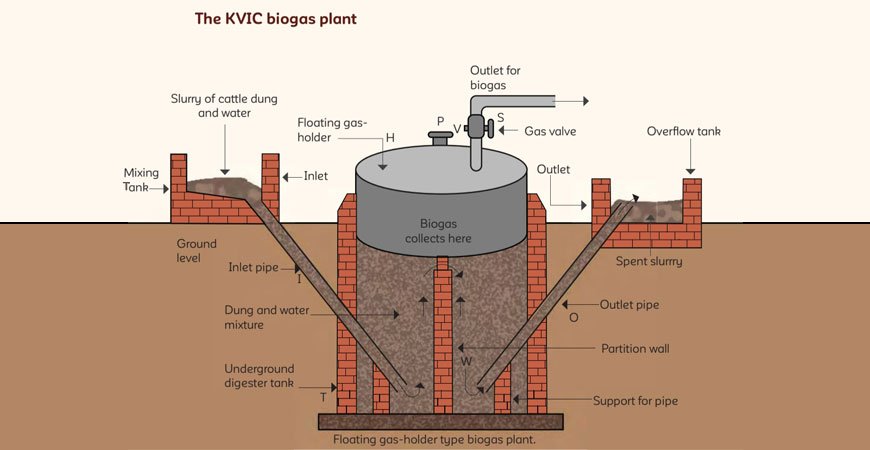
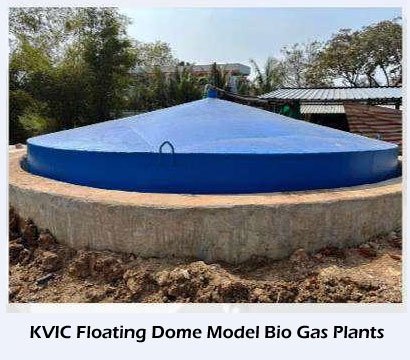
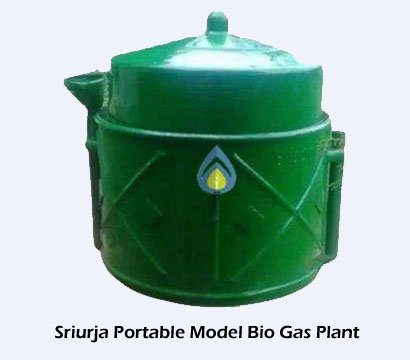
Based on clients' requirements, providing technical assistance to construct & install the energy devices and plants in the field of solar energy and Bio-gas, as most practical alternatives to cut down the cost of conventional energy. Available service includes KVIC Model 10 cum. to 85 cum. and 1 & 2 cum. portable bio gas plants.
KVIC Biogas Plant Capacity Statement (15 m3 to 85 m3)
Here is the complete data and technical statement for the KVIC floating dome biogas plant models ranging from 15 cubic meters to 85 cubic meters.
The standard thumb rule for KVIC models of biogas Plant:
Requires 25 kg of cattle dung and 25 liters of water (1:1 ratio). In terms of benefits, 1 m3 of biogas can cook meals for 4 to 5 people per day and is equivalent to 0.43 kg of LPG.
Technical Data Table
| Plant Capacity (m3/day) |
Minimum Cows Required (Based on 12.5 kg/cow) |
Daily Cattle Dung Required (kg) |
Daily Water Required (Liters) |
Cooking Capacity (Persons/day) |
Daily LPG Saved (kg) |
Monthly LPG Cylinders Saved (14.2 kg) |
| 15 m3 |
30 Cows |
375 kg |
375 L |
60–75 persons |
6.45 kg |
~13.6 Cylinders |
| 20 m3 |
40 Cows |
500 kg |
500 L |
80–100 persons |
8.60 kg |
~18.1 Cylinders |
| 25 m3 |
50 Cows |
625 kg |
625 L |
100–125 persons |
10.75 kg |
~22.7 Cylinders |
| 35 m3 |
70 Cows |
875 kg |
875 L |
140–175 persons |
15.05 kg |
~31.8 Cylinders |
| 45 m3 |
90 Cows |
1,125 kg |
1,125 L |
180–225 persons |
19.35 kg |
~40.9 Cylinders |
| 60 m3 |
120 Cows |
1,500 kg |
1,500 L |
240–300 persons |
25.80 kg |
~54.5 Cylinders |
| 85 m3 |
170 Cows |
2,125 kg |
2,125 L |
340–425 persons |
36.55 kg |
~77.2 Cylinders |
Core Technical Guidelines
-
Mixing Ratio: Maintain a strict 1:1 ratio of organic waste/dung to water. Ensure the mixture is homogenous and free of stones or heavy fibers before feeding it into the inlet.
-
LPG Savings Calculation: To find the monthly cylinders saved, the daily savings are multiplied by 30 days and divided by a standard 14.2 kg domestic cylinder weight.
-
Cattle Requirement: On average, a healthy stable-bound cow produces about 10–15 kg of dung per day. For a 15 m3 plant, you will need a minimum of 25 to 30 cows.
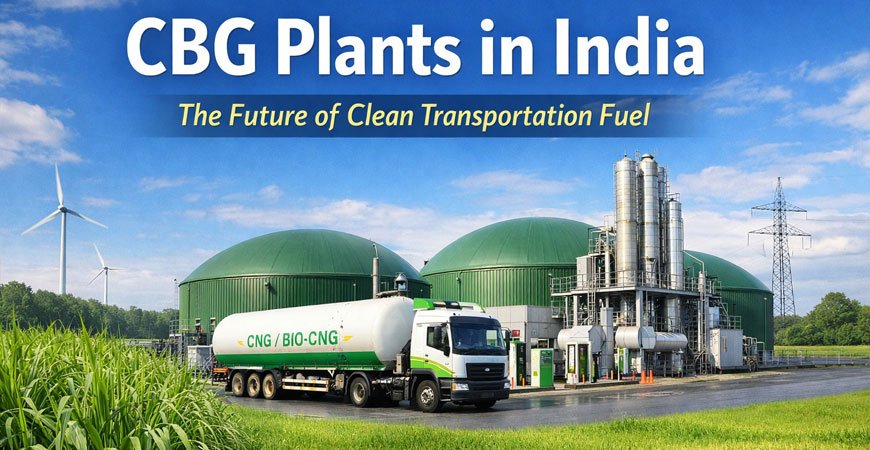
PROJECT STUDY REPORT: 1 TPD POULTRY WASTE BIO-CNG PLANT
A 1 Tonne Per Day (TPD) poultry waste Bio-CNG plant in Telangana requires an estimated capital investment of ₹45 Lakhs to ₹60 Lakhs, a land area of 2,500 to 4,000 square feet, and a flock size of 10,000-to-12,000-layer birds to generate a regular 1 TPD feedstock supply.
Technical Parameters & Feedstock Balance
Layer Bird Waste Characteristics
Layer bird droppings are highly organic and have a lower moisture content
compared to broiler litter.
-
Daily Feedstock Requirement: 1,000 kg (1 Tonne)
-
Waste Generation Rate: A single layer bird produces roughly 80 to 100 grams of droppings per day.
-
Flock Requirement: 10,000-to-12,000-layer birds are required to guarantee a 1 TPD feedstock supply.
Mass & Gas Yield Output
Poultry manure contains high levels of nitrogen, which requires optimal dilution and carbon-to-nitrogen (C/N) ratio management to avoid ammonia inhibition.
-
Raw Biogas Generation: ~90 to 110 m³ of raw biogas per tonne of pure poultry droppings.
-
Purified Bio-CNG (CBG) Yield: ~40 to 45 kg of compressed biogas per day (at 92% to 96% methane purity).
-
By-Product Yield: ~250 to 300 kg of high-quality organic bio-manure per day.
Daily Material & Gas Balance Scale (1 to 5 Tonnes Bio-CNG) and required land for cultivation of Napier gas
| Desired Bio-CNG Output |
Required Raw Napier Grass |
Required Raw Biogas Volume |
Resulting Liquid Digestate |
Resulting Solid FOM (Cake) |
| 1 Tonne/day (1,000 kg) |
20 Tonnes/day |
1,630 m³/day |
≈ 12,000 Litres |
≈ 4.0 Tonnes |
| 2 Tonne/day (2,000 kg) |
40 Tonnes/day |
3,260 m³/day |
≈ 24,000 Litres |
≈ 8.0 Tonnes |
| 3 Tonne/day (3,000 kg) |
60 Tonnes/day |
4,890 m³/day |
≈ 36,000 Litres |
≈ 12.0 Tonnes |
| 4 Tonne/day (4,000 kg) |
80 Tonnes/day |
6,520 m³/day |
≈ 48,000 Litres |
≈ 16.0 Tonnes |
| 5 Tonne/day (5,000 kg) |
100 Tonnes/day |
8,150 m³/day |
≈ 60,000 Litres |
≈ 20.0 Tonnes |
Details for Farming of Napier Grass Cultivation Approximately
| Plant Capacity (Bio-CNG) |
Daily Napier Grass Required |
Farming Land Required for Cultivation |
Daily Production of Organic Fertilizer |
| 1 Ton / Day |
20 Tons |
40-50 Acres |
6.5 Tons |
| 3 Ton / Day |
60 Tons |
120-150 Acres |
19.5 Tons |
| 5 Ton / Day |
100 Tons |
200-250 Acres |
35.0 Tons |
| 10 Ton / Day |
200 Tons |
400-500 Acres |
70.0 Tons |